Wisdom Teeth Removal in Northam
From your first wisdom teeth removal consultation through to recovery and aftercare. Here’s what to expect and a cost guide.
Signs That Your Wisdom Teeth Need Attention
Plenty of wisdom teeth come through without any fuss and can happily stay put. Others make their presence known — and those are the ones worth having checked. Book in with us if you’re experiencing:
- An ache or soreness right at the back of the jaw, whether on one side or both
- Gums that are inflamed, tender or bleed around a tooth that’s pushing through
- A lingering unpleasant taste, or breath that stays bad no matter how well you brush
- Trouble opening your jaw all the way, or discomfort when you chew
- A partly emerged tooth where the gum flap over it keeps flaring up
- Infections that clear up, then return in exactly the same place
The earlier a troublesome wisdom tooth is looked at, the more likely it can be dealt with simply — and the quicker you’ll bounce back. If you’re not sure whether yours are a problem, an examination and X-ray will settle the question.
Reasons for Extracting Wisdom Teeth
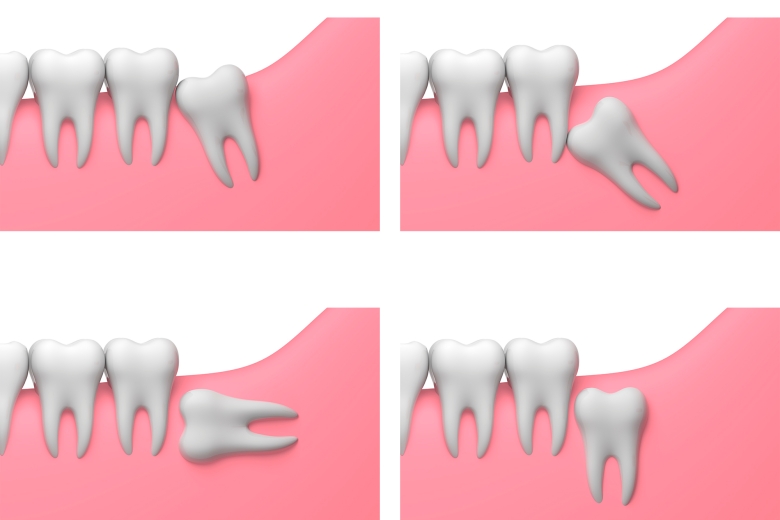
Impaction: Wisdom teeth are the last set of molars to emerge, and there may not be enough space in the jaw to accommodate them properly. This can lead to impaction, where they do not fully emerge or are trapped beneath the gum tissue or jawbone, causing pain, swelling, and infection.
Misalignment: Wisdom teeth may emerge at an angle, causing them to be misaligned with the adjacent teeth. This misalignment can disrupt the proper alignment of your other teeth and bite, potentially leading to bite problems and difficulty cleaning the area, which increases the risk of tooth decay and gum disease.
Crowding: Wisdom teeth can contribute to crowding issues in the mouth. If there isn’t enough space for them to come in properly, they can push against adjacent teeth, causing crowding and shifting of the teeth. This can affect the alignment of your smile and may require orthodontic treatment to correct.
Infection and Gum Disease: The location of wisdom teeth at the back of the mouth makes them harder to clean properly, which can increase the risk of infection and gum disease. This can lead to painful conditions like pericoronitis, which is inflammation of the tissue surrounding a partially erupted molar.
Cysts and Tumors: In some cases, cysts or tumors may develop around impacted wisdom teeth. These growths can cause damage to the jawbone and surrounding teeth and may require surgical removal.
Tooth Decay: Wisdom teeth are located in a hard-to-reach area of the mouth, making them more susceptible to tooth decay. If decay occurs and is left untreated, it can lead to cavities and potential complications.
Due to these potential issues, many dentists and oral surgeons recommend the removal of wisdom teeth in cases where there is a high likelihood of problems or when problems have already arisen. Extraction is common, and often performed preventively or to address existing issues.
Dentists and oral surgeons typically evaluate the positioning and development of wisdom teeth through X-rays and clinical examinations to determine whether extraction is necessary. Early removal is often recommended to avoid complications and ensure a smoother recovery.
Painful wisdom teeth? Call 9622 1245 or book online for an assessment.
Your Wisdom Teeth Assessment
At your assessment appointment you can expect:
- A thorough look at the back of your mouth, your gums and your bite.
- An OPG X-ray — one wide image showing your entire jaw. It reveals each wisdom tooth’s position, the shape of its roots, and how close it sits to nerves and neighbouring teeth.
- An overview of what we’ve found: whether removal makes sense, and whether it would be a simple extraction or a surgical one.
- A written treatment plan and quote, so you know the appointments involved and the full cost before deciding anything.
Good planning up front means no surprises on the day and an easier recovery afterwards.
Sedation Options For Wisdom Teeth Removal
Before a wisdom tooth is extracted, we will discuss your options for sedation. Usually a local anaesthetic works fine, with all you feeling is some pressure as your tooth is being removed. We’ll talk through the right approach for you at your consultation.
- Local anaesthetic is the most common option. The area is fully numbed, so you stay awake but feel only pressure, not pain. It suits most straightforward extractions.
- Sedation options include oral sedation, IV sedation or general anaesthetic. It all depends on your anxiety level, if several teeth are being removed at once, or if a tooth is more difficult to reach. Sedation helps you stay calm and relaxed throughout the procedure.
If you’ve had a bad experience at the dentist before, or the thought of the procedure makes you nervous, let us know. We’ll explain your choices and help you feel comfortable with the plan before anything goes ahead.
Cost To Remove Wisdom Teeth
Every mouth is different, so there’s no one set fee. What you’ll pay comes down to:
- The number of teeth being taken out.
- The position of each tooth — an upright, fully erupted tooth is a routine extraction, whereas an angled or impacted one calls for a surgical approach.
- Whether sedation is involved.
- Whether an OPG X-ray or other imaging is needed first.
- Whether we can remove the tooth here in the chair, or a referral to an oral surgeon is the better path.
The honest answer on cost starts with an assessment. Once we’ve examined your teeth, you’ll receive an itemised written quote covering everything — nothing hidden, nothing added later.
As a guide, a simple extraction of one fully erupted wisdom tooth starts from $250.
Call 9622 1245 or book online for a consultation.
Health Funds and Payment Plans
If you hold extras cover with a private health fund, you can generally claim a rebate on wisdom teeth removal. How much depends on your policy and remaining annual limits.
Medicare doesn’t cover general dental treatment for most adults, though some patients qualify for help through public schemes. See information about the Country Patient Dental Subsidy Scheme or get in contact ask us if you’re unsure.
To make treatment easier to budget for, Avon Valley Dental Centre offers interest-free payment plans through Afterpay and Zip, and eligible patients can apply through SuperCare to fund treatment using their superannuation. See our payment plans for the details.
After Your Wisdom Teeth Are Removed
You’ll most likely feel some discomfort in your gum and jaw, along with some swelling and minor bleeding over the first few days. Your dentist will offer after care advice, which may include:
- Taking paracetamol or another recommended pain relief medicine
- Eating soft foods and avoiding hot or cold drinks
- Using a salty mouthwash after the first 24 hours
Healing Week by Week
Most patients are back into their normal routine within days, although the gum itself takes a few weeks to close over fully. Simple extractions settle sooner than surgical ones. Here’s how to look after yourself along the way.
Day One
- Keep gentle pressure on the gauze pad so a blood clot can form in the socket — that clot is your body’s natural dressing, and it needs to stay where it is.
- Take it easy and keep your head propped up a little. No heavy lifting, bending or exercise.
- Leave the site alone: no vigorous rinsing, no forceful spitting, no prodding. No straws and no smoking either — suction is the clot’s worst enemy.
- Hold an ice pack against your cheek in twenty-minute intervals to limit swelling.
Days Two to Four
- Expect swelling to peak around the second or third day before easing. Mild bruising can appear and is nothing to worry about.
- Begin gentle warm salt-water rinses from the day after your extraction, particularly after meals.
- Brush the rest of your teeth as usual, giving the extraction site a wide berth until it calms down.
- Use pain relief as directed. Pain that’s worsening after day three, rather than improving, is your cue to phone us.
The Following Weeks
- Keep to softer foods until chewing feels normal again, then ease back into your regular diet.
- Any stitches will either dissolve by themselves or be taken out at a brief review appointment.
What to Eat While You Heal
For the first day or two, choose soft foods served lukewarm or cool — things that barely need chewing:
- Yoghurt, custard and smooth desserts
- Mashed potato and soft-cooked vegetables
- Scrambled eggs
- Warm (never hot) soups and broths
- Smoothies and milkshakes eaten with a spoon — never through a straw
- Porridge, oats and well-cooked pasta
Steer clear of anything crunchy, chewy or sharp — chips, nuts, seeds — along with spicy food and piping-hot meals or drinks, all of which can disturb the healing socket. It’s also wise to give alcohol and caffeine a miss for the first few days, and keep straws out of reach entirely.
Important
If you are experiencing any pain or problems with your teeth or gums, please get in contact immediately so that we can identify the cause and help you.
Avon Valley Dental Centre
59 Duke Street, Northam WA 6401

For appointments, information or dental emergencies: