Teething Chart
This article provides a helpful teething chart and timeline, identifies the specific order in which different teeth typically appear, and offers parents a clear guide for what to expect during their child’s early dental development.
By understanding these common milestones and the importance of early oral care, you can better monitor your baby’s progress and ensure their smile stays healthy from the very first tooth.
Key Points
When Do Baby Teeth Appear?
Most infants begin teething between 6 and 10 months of age. However, every child develops differently, and it is perfectly normal for baby teeth to appear as early as 3 months or as late as 12 months.
The final baby teeth, second molars, have usually erupted by age 3.
Teething Chart
Once teeth begin to erupt they will usually do so in a specific teething order. Please see the chart below for what teeth erupt first and when. It also shows when you can expect those baby teeth to fall out or be shed.
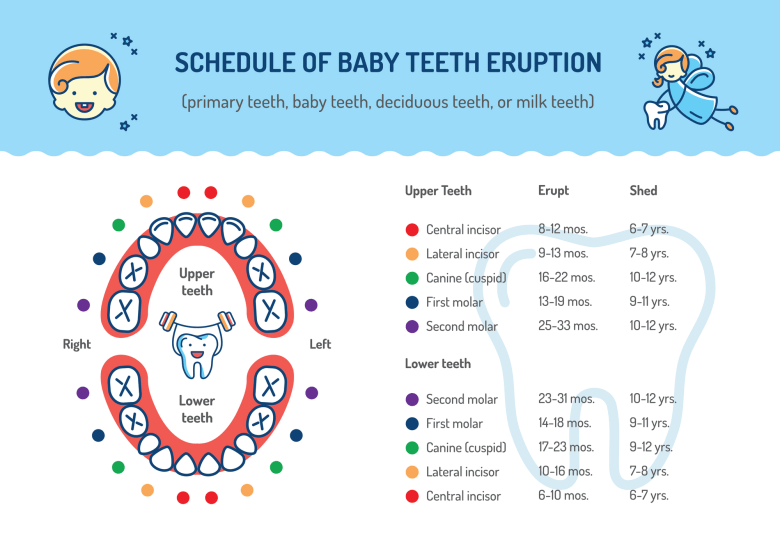
Average Teething Schedule
While every child is different and some babies are born with teeth while others wait until after their first birthday, most infants follow a relatively predictable sequence. Generally, teeth emerge in pairs, starting with the bottom front and moving toward the back of the mouth.
6 to 10 months: Lower central incisors (the two bottom front teeth) are usually the first to appear.
8 to 12 months: Upper central incisors (the two top front teeth) typically follow.
9 to 13 months: Upper lateral incisors (the teeth on either side of the top front teeth).
10 to 16 months: Lower lateral incisors (the teeth on either side of the bottom front teeth).
13 to 19 months: First molars (the wider teeth toward the back) often appear around this time, usually in the upper jaw first.
16 to 23 months: Canines (the pointed “eyeteeth”) fill the gaps between the incisors and the molars.
23 to 33 months: Second molars (the very back teeth) emerge, completing the set of 20 primary or “baby” teeth.
More About Baby Teeth
- The basic beginnings of teeth begin to form in the unborn fetus at 4 to 6 weeks.
- Your child will have 20 primary teeth (first teeth) by the time they turn 23 to 33 months old.
- These primary teeth will shed or fall out by the age of 12-15 years old and be replaced with permanent teeth (adult teeth).
- Find out more about how to care for baby teeth.
When Should Baby First See the Dentist?
Your baby’s first dentist visit should occur shortly after their first teeth erupt or they turn 12 months old.
Key Milestones to Remember
The 3 Year Mark: Most children will have their full set of 20 primary teeth by the time they are three years old.
Early vs. Late: If your child has no teeth by 12 to 15 months, it’s worth booking an appointment with a dentist to ensure development is on track.
Symmetry: Teeth usually erupt in pairs on the left and right sides. If you notice significantly asymmetrical growth or if a tooth is missing on one side for several months, a professional assessment is recommended.
Avon Valley Dental Centre in Northam
Regular dental checkups for young children are important for their health and well-being. To make an appointment or get more information, please contact us or book online.
See our tips for when your baby is teething.